Ceramic Bearings vs Steel Bearings: Which Is Better for Dental Handpieces?
Bearings are among the most critical components inside a dental handpiece, directly affecting rotational performance, noise levels, durability, and overall user experience. Two of the most common options are ceramic bearings and steel bearings. This article compares their characteristics, advantages, and limitations to help clinicians, distributors, and procurement professionals make informed decisions when selecting dental handpieces.
Ceramic Bearings vs Steel Bearings: Which Is Better for Dental Handpieces?
Introduction
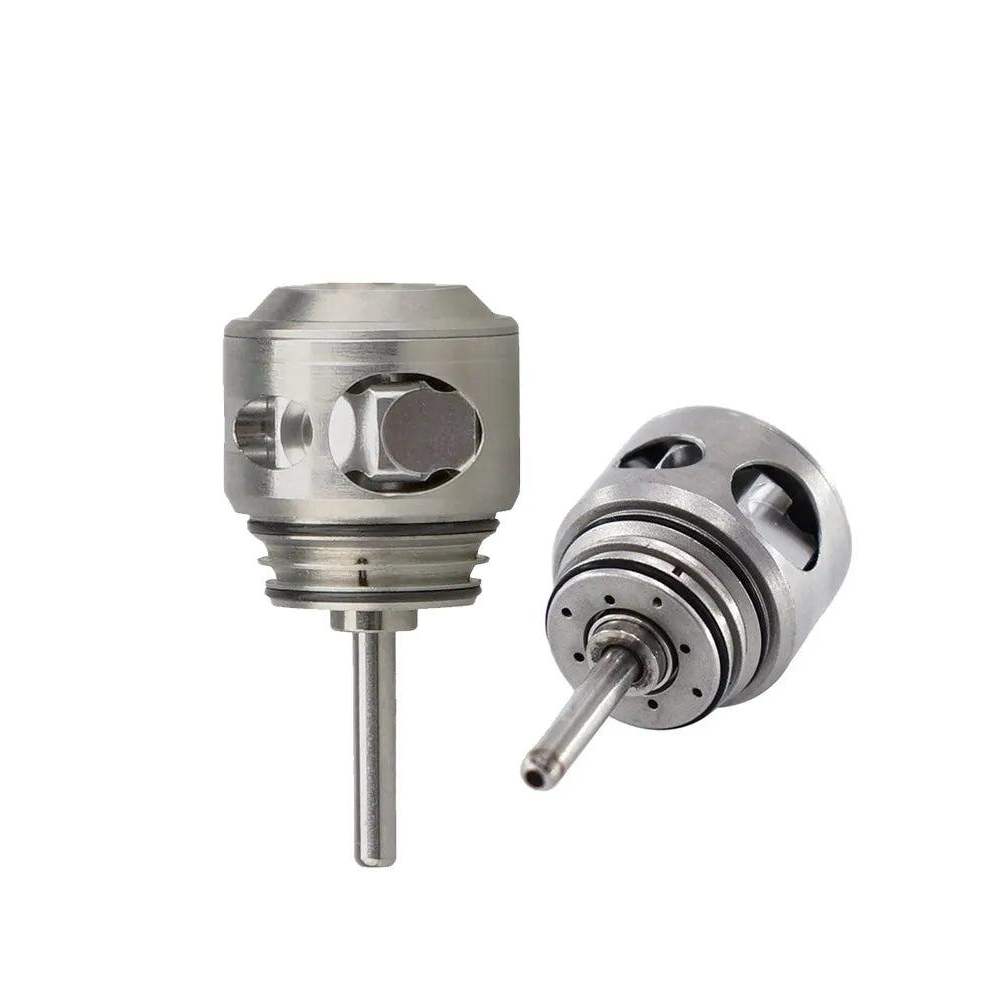
When evaluating a dental handpiece, buyers often focus on speed, head size, water spray design, or price. However, one of the most important components is hidden inside the cartridge: the bearing system.
Bearings support the turbine’s rotation and play a major role in determining performance, smoothness, durability, and maintenance requirements.
Today, most dental handpieces use either steel bearings or ceramic bearings. While both can provide reliable performance when properly manufactured, they offer different advantages depending on clinical requirements and budget considerations.
Understanding these differences can help distributors position products more effectively and assist clinicians in selecting handpieces that match their practice needs.
What Is a Bearing in a Dental Handpiece?
A bearing is a precision mechanical component that supports high-speed rotation while minimizing friction.
Inside a high-speed dental handpiece, the turbine may rotate at speeds exceeding:300,000 RPM
At these speeds, bearing quality becomes critical.
The bearing system helps:
* Support turbine rotation
* Reduce friction
* Minimize vibration
* Improve operational stability
* Extend service life
Poor-quality bearings can negatively affect performance and lead to premature cartridge failure.
⸻
Understanding Steel Bearings
Steel bearings have been used in dental handpieces for decades and remain widely adopted throughout the industry.
They are typically manufactured from hardened stainless steel designed to withstand continuous high-speed operation.
Advantages of Steel Bearings
Cost-Effective
Steel bearings are generally less expensive to manufacture, helping reduce overall handpiece costs.
Proven Reliability
Decades of clinical use have demonstrated their effectiveness in a wide range of applications.
Strong Impact Resistance
Steel bearings can tolerate mechanical shock reasonably well under normal operating conditions.
Easier Replacement
Replacement components are often readily available in many markets.
⸻
Limitations of Steel Bearings
Higher Friction
Compared with ceramic materials, steel produces greater friction during operation.
More Heat Generation
Increased friction may contribute to higher operating temperatures.
Greater Wear Over Time
Continuous high-speed use can gradually increase wear rates.
Potential Corrosion Concerns
Although stainless steel provides corrosion resistance, repeated sterilization cycles may eventually affect long-term performance if maintenance procedures are not followed properly.
⸻
Understanding Ceramic Bearings
Ceramic bearings have become increasingly popular in premium dental handpieces.
These bearings typically utilize advanced ceramic balls combined with precision-engineered bearing assemblies.
Many manufacturers market ceramic-bearing handpieces as premium products due to their performance characteristics.
⸻
Advantages of Ceramic Bearings
Reduced Friction
Ceramic materials generally produce less friction during rotation.
This can contribute to:
* Smoother operation
* Improved efficiency
* Reduced energy loss
⸻
Lower Heat Generation
Reduced friction often results in lower operating temperatures during clinical use.
⸻
Improved Wear Resistance
Ceramic materials exhibit excellent hardness and wear resistance under normal operating conditions.
⸻
Reduced Vibration
Many users report smoother rotational performance and lower vibration levels compared with conventional steel-bearing systems.
⸻
Corrosion Resistance
Ceramic materials are highly resistant to corrosion and moisture exposure.
This characteristic can be beneficial in environments involving frequent cleaning and sterilization.
⸻
Potential Limitations of Ceramic Bearings
Although ceramic bearings offer several advantages, they are not necessarily the ideal solution for every application.
Higher Cost
Ceramic-bearing handpieces generally command higher prices than comparable steel-bearing models.
⸻
Manufacturing Quality Matters
Not all ceramic-bearing systems perform equally.
Poor manufacturing tolerances can negate many of the theoretical advantages associated with ceramic materials.
⸻
Not a Guarantee of Better Overall Quality
A ceramic bearing alone does not automatically indicate a superior handpiece.
Other factors remain equally important, including:
* Turbine design
* Cartridge construction
* Balancing accuracy
* Airflow efficiency
* Quality control processes
⸻
Performance Comparison
Feature | Steel Bearings | Ceramic Bearings |
|---|---|---|
Cost | Lower | Higher |
Friction | Higher | Lower |
Heat Generation | Higher | Lower |
Corrosion Resistance | Good | Excellent |
Wear Resistance | Good | Excellent |
Smoothness | Good | Excellent |
Noise Levels | Good | Often Lower |
Premium Positioning | Standard | Premium |
Which Bearing Type Is Better for Clinics?
The answer depends on clinical priorities.
Steel Bearings May Be Suitable When:
- Budget is a primary concern
- General dentistry applications dominate
- Cost-effective replacement is preferred
Ceramic Bearings May Be Suitable When:
- Premium performance is desired
- High daily usage is expected
- Reduced vibration is preferred
- Long-term operational efficiency is important
Many clinics successfully use both types depending on treatment requirements and equipment budgets.
What Do Distributors Need to Consider?
For distributors and importers, the bearing type often influences market positioning.
Steel-Bearing Handpieces
Typically positioned as:
- Entry-level products
- Value-oriented solutions
- High-volume distribution items
Ceramic-Bearing Handpieces
Often positioned as:
- Premium products
- Higher-margin offerings
- Professional-grade solutions
In many markets, offering both options allows distributors to address multiple customer segments.
Beyond Bearings: Other Factors That Matter
While bearings are important, they represent only one part of the overall handpiece system.
When evaluating dental handpieces, buyers should also consider:
Turbine Design
A well-designed turbine directly affects cutting efficiency and airflow performance.
Cartridge Quality
The cartridge assembly determines overall operational consistency.
Water Spray System
Effective cooling improves both clinical performance and patient comfort.
Sterilization Resistance
Repeated autoclave cycles place significant demands on internal components.
Spare Parts Availability
Reliable access to replacement cartridges and maintenance components can reduce long-term operating costs.
Conclusion
Both ceramic bearings and steel bearings have proven their value in modern dental handpieces.
Steel bearings remain a practical and cost-effective solution for many clinical environments, while ceramic bearings offer advantages in friction reduction, smoothness, wear resistance, and premium performance.
Rather than focusing solely on bearing material, buyers should evaluate the complete handpiece system, including cartridge quality, turbine design, manufacturing consistency, and after-sales support.
For distributors, offering both steel-bearing and ceramic-bearing options can provide flexibility in addressing diverse market needs and customer expectations.