Home > Insights > How to Choose the Right Dental Handpiece: Complete Buying Guide for Clinics & Distributors
How to Choose the Right Dental Handpiece: Complete Buying Guide for Clinics & Distributors
Selecting the right dental handpiece requires more than comparing specifications. This guide explains how clinics, distributors, and OEM buyers evaluate performance, reliability, compatibility, and long-term value before making a purchasing decision.

This guide is designed for professionals who need to make informed purchasing decisions rather than simply compare product specifications. It is particularly useful for: Whether you are purchasing a single handpiece or evaluating suppliers for long-term cooperation, If you’re sourcing products for distribution or private labeling, choosing the right manufacturing partner is just as important as selecting the right handpiece. The decision should be based on clinical requirements, operational efficiency, and long-term value—not simply on price. Choosing a dental handpiece is one of the most important equipment decisions a dental practice or distributor can make. While many buyers compare rotational speed, bearing type, or product price, experienced professionals evaluate a much broader set of factors. In this guide, you’ll learn: ✓ How professional buyers compare dental handpieces ✓ Why the lowest purchase price rarely delivers the lowest long-term cost ✓ How daily clinical workload influences equipment selection ✓ Which technical specifications actually matter, such as bearing type, illumination, and handpiece configuration.—and which don’t ✓ How distributors evaluate manufacturers before placing large orders ✓ A practical procurement checklist you can use before making a purchase Rather than recommending a single product, this guide provides a structured decision-making process that helps buyers choose the right handpiece for their specific clinical or commercial requirements. Imagine comparing two dental handpieces from different manufacturers. Both advertise: On paper, they appear almost identical. Many buyers naturally assume the less expensive option offers better value. However, after twelve months of daily clinical use, the situation may look very different. One handpiece continues to deliver smooth cutting performance with minimal maintenance. The other begins to develop excessive vibration, reduced cutting efficiency, increased operating noise, or premature cartridge wear. The difference is rarely explained by a single specification. Instead, long-term performance depends on multiple factors working together, including: These factors are difficult to identify from a product brochure alone, yet they often determine whether a handpiece remains reliable after thousands of clinical procedures. For this reason, experienced buyers rarely ask: “Which dental handpiece is the best?” Instead, they ask: “Which dental handpiece is the best fit for my clinical workload, equipment, and long-term business goals?” That simple shift in perspective changes the entire purchasing process. One of the biggest misconceptions in equipment purchasing is believing that technical specifications alone determine product quality. In reality, professional buyers evaluate dental handpieces from several different perspectives. The table below summarizes the decision-making process used by many experienced clinics and distributors. A common mistake is allowing the purchase price to dominate the evaluation process. Professional buyers typically view price as the final comparison point, not the starting point. They first determine whether a product is technically suitable, operationally reliable, and commercially sustainable. Only then do they compare quotations. Before comparing brands or requesting quotations, define how the handpiece will actually be used. Different dental procedures place different demands on speed, torque, visibility, precision, and durability. Selecting a handpiece without considering clinical application often leads to unnecessary costs or reduced treatment efficiency. The following table provides a practical reference. Most modern dental practices require both high-speed and low-speed handpieces because they serve different purposes throughout the treatment process. If you’re unsure about the differences, read our detailed comparison of High-Speed vs. Low-Speed Dental Handpieces before making a purchasing decision. Attempting to replace one with the other usually reduces efficiency rather than lowering costs. Professional Tip If your clinic performs a wide range of restorative procedures every day, investing in a balanced combination of high-speed and low-speed handpieces generally provides better clinical flexibility than purchasing multiple units of a single type. Two clinics may purchase the same model of dental handpiece, yet experience completely different levels of performance and service life. The reason is simple: Usage intensity directly affects durability requirements. A private clinic treating eight patients per day places far less stress on a handpiece than a busy multi-chair practice treating forty or more patients daily. As workload increases, small differences in manufacturing quality become increasingly significant. Higher-quality bearings, more precise rotor balancing, and better cooling systems can reduce vibration, improve operator comfort, and extend service life under demanding conditions. Before making a purchasing decision, consider the following questions: The answers help determine whether a standard configuration is sufficient or whether a premium solution will provide better long-term value. For many practices, purchasing according to workload rather than budget results in lower maintenance costs and more predictable long-term performance. One of the most common misconceptions in dental equipment purchasing is assuming that the lowest purchase price represents the best value. In reality, experienced buyers evaluate the total cost of ownership (TCO) rather than the initial purchase price. A dental handpiece is not a one-time expense. Throughout its service life, it generates additional costs through maintenance, sterilization, replacement parts, downtime, and potential warranty claims. These expenses often exceed the original purchase price. Consider the following comparison. Although the premium model requires a higher initial investment, its longer service life and lower maintenance requirements may reduce the overall operating cost over several years. For busy clinics, every hour of unexpected equipment downtime can disrupt appointment schedules and reduce productivity. For distributors, warranty claims and product returns consume resources that are rarely reflected in the original purchase price. Professional buyers therefore ask a different question: How much will this handpiece cost to own over the next three to five years—not just today? That perspective often leads to very different purchasing decisions. When evaluating long-term value, consider the complete ownership cycle. The handpiece with the lowest selling price does not necessarily deliver the lowest operating cost. Compatibility is frequently overlooked during the purchasing process. However, incompatibility is one of the most common reasons buyers become dissatisfied after receiving their equipment. Before comparing brands, confirm that the handpiece integrates smoothly with your existing clinical setup. Coupling Compatibility Different dental units use different connection standards. The most common options include: Selecting the wrong coupling may require additional adapters or prevent immediate installation. If you are purchasing for multiple clinics, verify that all treatment rooms use the same connection standard before placing a bulk order. Head size directly influences accessibility and visibility. Neither option is universally better. The correct choice depends on the procedures performed most frequently. Modern clinics increasingly prefer illuminated handpieces because improved visibility contributes to greater treatment precision. Common options include: The decision should be based on clinical workflow rather than marketing claims. Although often overlooked, the bur retention mechanism significantly affects daily efficiency. Push-button systems have become the industry standard because they simplify bur replacement and reduce procedure time. However, some practices continue using wrench-type systems due to equipment compatibility or operator preference. Selecting the correct retention system before purchasing helps avoid unnecessary adjustments after installation. Instead of asking “Which model is the best?”, professional buyers first determine which solution best fits their operating environment. The following matrix provides a practical starting point. Notice that price does not appear in the first column. Professional buyers define their operational priorities before comparing quotations. Case Study: Equipping a New Dental Practice A newly established dental clinic is preparing to open with three treatment rooms. The purchasing team initially plans to minimize investment by ordering only standard high-speed handpieces. After reviewing the clinic’s treatment plan, they realize that restorative procedures, polishing, prophylaxis, and occasional endodontic treatments will all be performed on a daily basis. Instead of purchasing six identical handpieces, they choose a more balanced configuration: Although the initial investment increases slightly, the clinic benefits from greater clinical flexibility, fewer equipment limitations, and improved workflow from the first day of operation. The lesson is straightforward: Purchasing according to clinical workflow generally delivers better long-term value than purchasing according to price alone. If you’re planning your own equipment configuration, explore our complete range of Dental Handpieces to compare high-speed and low-speed solutions for different clinical applications. Case Study: Expanding a Distributor’s Product Portfolio A regional dental distributor plans to introduce dental handpieces into its existing portfolio. Three manufacturers offer products with similar specifications and comparable pricing. Instead of comparing only catalogs, the distributor evaluates each supplier using broader business criteria: Although one manufacturer offers the lowest quotation, another demonstrates stronger quality control procedures, more stable production, and better long-term support. The distributor selects the second supplier. Over the following two years, warranty claims remain low, customer satisfaction improves, and repeat orders increase steadily. The purchasing decision was based not on obtaining the lowest quotation, but on reducing long-term business risk. Choosing the right dental handpiece is only half of the purchasing decision. The other half is selecting a manufacturer capable of delivering consistent quality over the long term. Many buyers compare specifications before comparing manufacturers. Professional procurement teams usually do the opposite. A product specification sheet reflects what a manufacturer claims to produce. A manufacturing system determines what the supplier can consistently deliver. Before establishing a long-term partnership, evaluate the manufacturer’s capabilities in the following areas. A reliable manufacturer should be able to explain how quality is controlled, not simply claim that quality is high. Even experienced buyers can make costly purchasing decisions when focusing on short-term savings instead of long-term value. Price should be the final comparison point—not the starting point. A lower purchase price often results in higher maintenance costs, shorter service life, and more frequent product replacement. A handpiece suitable for a small private practice may not withstand the demands of a high-volume clinic. Always match the product to actual clinical usage. Incorrect coupling types, incompatible illumination systems, or unsuitable head sizes can create unnecessary installation problems. Compatibility should always be verified before placing an order. Two products with identical specifications may perform very differently because of differences in machining precision, balancing accuracy, assembly quality, and inspection standards. Specifications alone never tell the complete story. Routine lubrication, sterilization procedures, and spare part availability directly influence service life. Products that are easier to maintain generally provide better long-term value. A product can be replaced. A reliable manufacturing partner creates lasting business value through consistent quality, dependable delivery, and responsive technical support. Whenever possible, request evaluation samples before placing large-volume orders. Testing products under real clinical conditions provides insights that specification sheets cannot. Before making your final purchasing decision, review the following checklist. This checklist can help reduce procurement risks and improve purchasing confidence for both clinics and distributors. Based on common purchasing practices across the dental industry, the following recommendations can help buyers make more informed decisions. For distributors, long-term product consistency is often more valuable than obtaining the lowest unit price. The dental handpiece market continues to evolve as clinics place greater emphasis on efficiency, ergonomics, and long-term reliability. Several trends are shaping purchasing decisions: As buyer expectations continue to increase, manufacturers are expected to deliver not only competitive products but also consistent quality systems and dependable after-sales support. High-speed handpieces are designed for cutting enamel and dentin, while low-speed handpieces provide greater control for polishing, finishing, prophylaxis, and endodontic procedures. For clinics with moderate to high patient volumes, ceramic bearings often provide improved durability, smoother operation, and reduced maintenance requirements over time. Lubrication frequency depends on the manufacturer’s recommendations and clinical workload. Following the prescribed maintenance schedule helps maximize service life and maintain performance. Proper lubrication, correct sterilization procedures, timely replacement of worn components, and selecting products with readily available spare parts all contribute to lower maintenance costs. Should distributors stock spare cartridges? Yes. Keeping essential replacement components in stock helps reduce downtime for customers and improves after-sales service. Many manufacturers offer OEM services such as logo engraving, customized packaging, multilingual manuals, and private label branding. Available options should be confirmed before placing an order. Professional buyers typically request product samples, technical specifications, warranty details, quality certifications, production lead times, and information about spare parts availability. Reliable technical support and warranty service are essential for minimizing downtime and maintaining customer satisfaction, particularly for distributors managing multiple accounts. Final Thoughts Choosing the right dental handpiece is not about finding the highest rotational speed or the lowest quotation. The best purchasing decisions begin with understanding clinical requirements, evaluating long-term operating costs, confirming equipment compatibility, and selecting a manufacturer capable of delivering consistent quality over many years. Whether you are equipping a single treatment room, expanding a distribution portfolio, or building your own private label brand, focusing on long-term value rather than short-term cost will almost always produce better clinical and commercial outcomes. Explore Professional Dental Handpiece Solutions Selecting the right handpiece is only the first step. Choosing a manufacturing partner that can provide consistent quality, dependable support, and flexible OEM services is equally important. Explore our range of high-speed and low-speed dental handpieces to find solutions designed for reliable clinical performance, efficient daily operation, and long-term business growth.How to Choose the Right Dental Handpiece: A Professional Buying Guide for Clinics, Distributors & OEM Brands
Who Should Read This Guide?
Executive Summary
Why Two Similar Handpieces Can Perform Very Differently
How Professional Buyers Evaluate Dental Handpieces
Evaluation Area Why It Matters Relative Importance Clinical suitability Ensures the handpiece matches daily treatment procedures ★★★★★ Reliability & durability Reduces unexpected downtime and repair costs ★★★★★ Long-term operating cost Reflects maintenance expenses over the product lifecycle ★★★★☆ Equipment compatibility Prevents installation and workflow issues ★★★★☆ Manufacturer capability Ensures stable quality and supply consistency ★★★★☆ Purchase price Important, but only one part of the decision ★★★☆☆ Question 1: What Procedures Will This Handpiece Perform Every Day?
Clinical Procedure Primary Requirement Recommended Handpiece Tooth preparation High cutting efficiency High-Speed Handpiece Crown & bridge preparation Precision at high speed High-Speed Handpiece Composite finishing Fine control Low-Speed Handpiece Root canal procedures Stable torque Low-Speed Handpiece Prophylaxis Smooth low-speed rotation Low-Speed Handpiece Denture adjustment Precision finishing Low-Speed Handpiece Question 2: How Intensive Is Your Daily Clinical Workload?
Recommended Selection Based on Daily Workload
Daily Clinical Workload Recommended Configuration Fewer than 15 patients/day Standard configuration suitable for routine procedures 15–30 patients/day Ceramic bearings, improved balancing, reliable cartridge system More than 30 patients/day Premium configuration with enhanced durability, efficient cooling, and comprehensive after-sales support Question 3: Is Purchase Price Really the Most Important Cost?
Evaluation Item Economy Model Premium Model Initial Purchase Price Lower Higher Expected Bearing Life Standard Extended Maintenance Frequency Higher Lower Spare Part Replacement More Frequent Less Frequent Clinical Downtime Higher Risk Lower Risk Long-Term Operating Cost Potentially Higher Often Lower Cost Is More Than the Invoice
Direct Costs
Indirect Costs
Question 4: Will This Handpiece Work with Your Existing Equipment?
Head Size
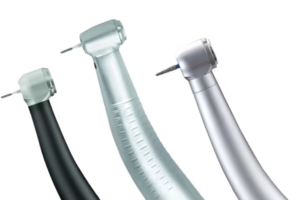
Head Type Best For Standard Head General restorative procedures and maximum cutting efficiency Mini Head Pediatric dentistry, posterior teeth, and limited-access treatment areas Illumination
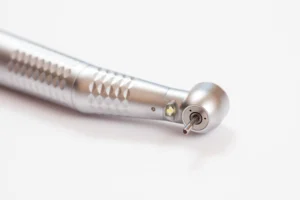
Illumination Typical Advantages Standard Cost-effective solution for routine procedures LED Bright illumination, long service life, low maintenance Fiber Optic Excellent light transmission when used with compatible systems Bur Retention System
Dental Handpiece Decision Matrix
Buyer Profile Primary Objective Recommended Priority New Dental Clinic Versatility Balanced combination of high-speed and low-speed handpieces General Practice Daily reliability Ceramic bearings, easy maintenance, ergonomic design Cosmetic Clinic Precision LED or fiber optic illumination, lightweight construction High-Volume Clinic Durability Premium bearings, superior cooling, consistent performance Dental Distributor Product consistency Stable quality, spare parts availability, technical support Private Label Brand Long-term manufacturing partnership OEM capability, quality management system, production scalability Question 5: How Do You Evaluate a Manufacturer Instead of Just a Product?
Manufacturing Capability Assessment
Evaluation Area Why It Matters Questions to Ask Quality Management Ensures consistency between production batches Is every unit inspected before shipment? Production Capacity Supports business growth and stable delivery Can production scale during peak seasons? Engineering Support Helps solve technical issues efficiently Is technical documentation available? Spare Parts Supply Simplifies long-term maintenance Are cartridges and bearings available separately? OEM & Private Label Supports brand development Can logos, packaging, and manuals be customized? Warranty & After-Sales Service Reduces business risk What is the warranty process and response time? Seven Common Purchasing Mistakes
Mistake 1: Choosing the Lowest Price
Mistake 2: Ignoring Daily Workload
Mistake 3: Overlooking Compatibility
Mistake 4: Comparing Specifications Without Considering Manufacturing Quality
Mistake 5: Ignoring Maintenance Requirements
Mistake 6: Evaluating Products Instead of Suppliers
Mistake 7: Buying Without Testing
Professional Procurement Checklist
Checklist Item Complete Clinical application clearly defined ☐ Daily workload evaluated ☐ High-speed and low-speed requirements confirmed ☐ Coupling compatibility verified ☐ Head size selected ☐ Illumination option confirmed ☐ Bearing type reviewed ☐ Maintenance requirements understood ☐ Spare parts availability confirmed ☐ Warranty policy reviewed ☐ Manufacturer capability evaluated ☐ Product samples tested ☐ Expert Recommendations
Industry Trends in Dental Handpieces
Frequently Asked Questions
What is the difference between high-speed and low-speed dental handpieces?
Are ceramic bearings worth the additional cost?
How often should dental handpieces be lubricated?
How can I reduce maintenance costs?
Is OEM customization available?
What should I request before placing a large order?
How important is after-sales support?
- Who Should Read This Guide?
- Executive Summary
- Why Two Similar Handpieces Can Perform Very Differently
- How Professional Buyers Evaluate Dental Handpieces
- Cost Is More Than the Invoice
- Head Size
- Illumination
- Bur Retention System
- Manufacturing Capability Assessment
- Seven Common Purchasing Mistakes
- Expert Recommendations
- Frequently Asked Questions
- What is the difference between high-speed and low-speed dental handpieces?