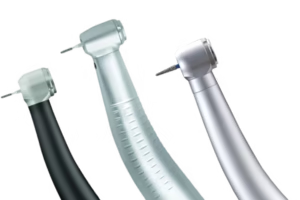
How Does a Dental Handpiece Work?
Learn how a dental handpiece converts compressed air or electrical power into rotational motion. This guide explains air turbines, electric motors, bearings, spindles, chucks, torque, cooling systems, and the components that determine handpiece performance.
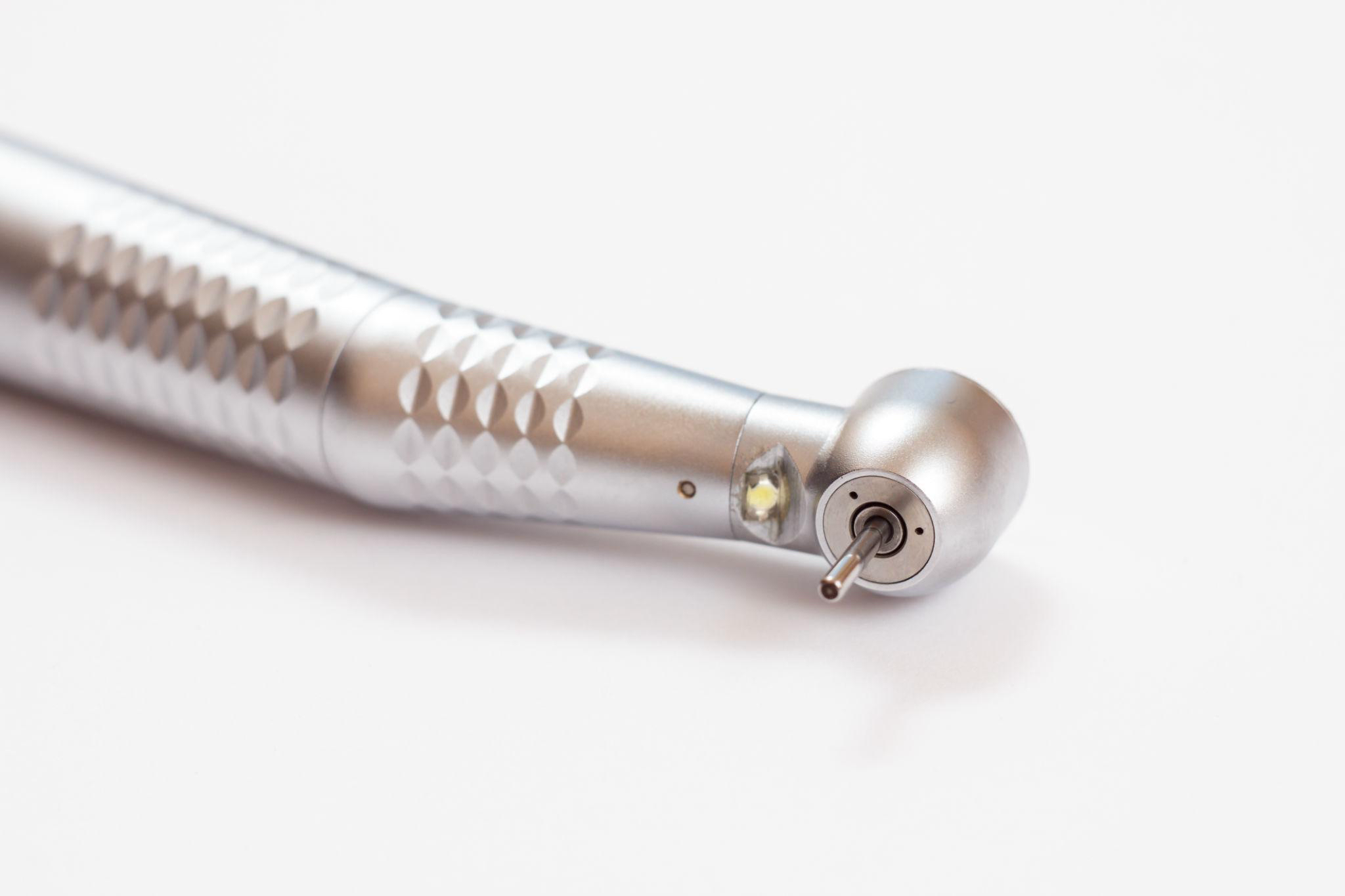
How Does a Dental Handpiece Work? Inside the Mechanism, Components & Power Systems
A dental handpiece works by converting compressed air or electrical power into controlled rotational motion that drives a dental bur or other compatible instrument.
The basic principle is simple:
Power source → Drive mechanism → Rotating assembly → Chuck → Bur → Working action
But the mechanism inside a dental handpiece is more sophisticated than this simple sequence suggests. In a high-speed air turbine handpiece, compressed air drives a miniature turbine inside the head. The turbine transfers rotation through a spindle and chuck while precision bearings support the rotating assembly. In an electric system, an electric motor generates rotational power that may be transferred through gearing or another transmission mechanism.
Understanding what happens inside the handpiece is important because speed alone does not determine performance. Turbine design, bearing quality, spindle accuracy, chuck retention, torque, cooling, manufacturing precision, and compatibility between components all influence how a handpiece performs.
For dental professionals, this explains why different handpieces feel and perform differently. For dental distributors, importers, and private-label brands, it provides a practical framework for evaluating specifications and product quality.
How Does a Dental Handpiece Work?
A dental handpiece receives power from a dental unit or motor system and converts that power into rotational movement at the working end.
The exact mechanism depends on the handpiece design, but the working process can be understood through five stages:
1. Power enters the system
Compressed air or electrical power is supplied by the dental unit or motor system.
2. The drive mechanism generates rotation
An air turbine or electric motor converts the supplied energy into rotational movement.
3. The rotating assembly is supported
Precision bearings support the rotating components and help maintain stable rotation.
4. Rotation is transferred to the bur
The spindle and chuck transfer the rotational movement to the dental bur.
5. The bur performs the working action
The rotating bur cuts, shapes, finishes, polishes, or performs another intended function.
This means that a dental handpiece is not simply a motor or a rotating bur holder. It is a coordinated mechanical system in which multiple components must work together accurately.
What Makes a Dental Handpiece Rotate?
The component that creates rotation depends on the power system.
In a high-speed air turbine handpiece, compressed air drives a turbine rotor inside the head.
In an electric handpiece system, an electric motor generates the rotational movement.
The simplified mechanisms are:
Air turbine:
Compressed air → Turbine rotor → Spindle → Chuck → Bur
Electric system:
Electric motor → Transmission / gearing → Spindle or attachment → Chuck → Bur
This distinction is fundamental when comparing different dental handpiece technologies.
How Does a High-Speed Air Turbine Handpiece Work?
A high-speed air turbine handpiece uses compressed air to rotate a small turbine located inside the handpiece head.
The basic power path is:
Compressed air → Turbine → Rotor / spindle → Chuck → Bur
When the handpiece is activated, drive air enters through the connection system and travels through internal air passages toward the turbine.
The air is directed against the turbine rotor, causing the rotating assembly to spin at high speed.
The rotor is mechanically connected to the spindle and chuck. As the rotor turns, the chuck turns with it, causing the retained bur to rotate.
This mechanism is why the turbine is often considered the heart of a high-speed air turbine handpiece.
How Does Compressed Air Drive the Turbine?
The dental unit supplies compressed drive air through the handpiece connection.
Inside the handpiece, the air is directed toward the turbine rotor. The interaction between the moving air and the turbine geometry produces rotational force.
The process can be simplified as:
Drive air enters → Air strikes the turbine → Turbine rotates → Spindle rotates → Chuck rotates → Bur rotates
After transferring energy to the turbine, the air must leave through the appropriate exhaust path.
The efficiency of this airflow path depends on the design of the turbine, internal air passages, pressure conditions, and manufacturing precision.
This is one reason why two air turbine handpieces with similar nominal speed specifications can still behave differently in actual use.
What Happens Inside the Turbine Cartridge?
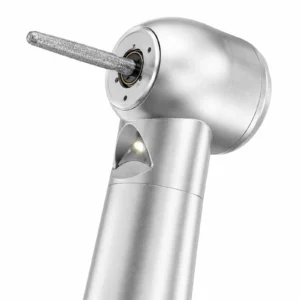
The turbine cartridge is the compact rotating assembly located inside the head of many high-speed handpieces.
A typical cartridge may contain:
- Rotor
- Spindle or bur tube
- Chuck
- Bearings
- O-rings or other supporting components
The exact construction varies by manufacturer and cartridge design.
A simplified internal arrangement is:
Rotor
↓
Spindle / bur tube
↓
Chuck
↓
Bur
The rotating assembly is supported by bearings positioned around the spindle or bur tube.
This arrangement allows the bur to rotate around a controlled central axis while the surrounding handpiece head remains stationary.
What Is the Rotor?
The rotor is the component that interacts with the compressed air.
Its geometry is designed to convert airflow into rotational movement.
Because the rotor is part of a high-speed rotating assembly, its balance and dimensional accuracy are important.
Small manufacturing deviations can become more significant as rotational speed increases.
Rotor design therefore affects more than simply whether the turbine can spin. It can also influence rotational stability, vibration, airflow efficiency, and the overall operating characteristics of the handpiece.
What Is the Spindle or Bur Tube?
The spindle is the rotating shaft that transfers motion from the turbine assembly to the chuck and bur.
In some turbine designs, the bur tube forms part of the rotating assembly around which the rotor and bearings are arranged.
The spindle must remain accurately aligned because the bur rotates around the same axis.
Poor alignment or excessive mechanical play can contribute to:
- Increased vibration
- Reduced bur stability
- Uneven rotation
- Noise
- Premature component wear
For this reason, spindle geometry and machining precision are important parts of handpiece manufacturing quality.
How Do Bearings Support the Turbine?
The bearings support the rotating assembly and allow it to spin with controlled friction.
A typical turbine cartridge uses bearings positioned around the rotating shaft or bur tube.
The bearing assembly generally includes:
- Inner race
- Outer race
- Rolling elements
- Cage or retainer
The bearing keeps the rotating shaft supported while allowing it to rotate smoothly.
At very high rotational speeds, bearing condition becomes particularly important because contamination, wear, poor lubrication, or mechanical damage can affect rotational stability.
This is why bearing quality is closely connected with handpiece noise, vibration, service life, and operating smoothness.
For a deeper comparison of bearing materials, see our article Ceramic Bearings vs Steel Bearings for Dental Handpieces.
What Is the Chuck?
The chuck is the bur-retention mechanism.
It holds the compatible dental bur inside the rotating assembly while allowing the bur to rotate with the spindle.
Common retention configurations include push-button and other chuck mechanisms depending on the handpiece design.
A properly functioning chuck must provide reliable retention while still allowing the bur to be inserted and removed according to the intended mechanism.
Chuck performance therefore affects both operational stability and user confidence.
If the chuck does not retain the bur correctly, the problem is not simply a convenience issue. It can indicate wear, contamination, mechanical damage, or an incompatible bur.
Inside a Dental Turbine: How the Components Work Together
The individual components of a turbine cartridge should not be evaluated independently.
They form a mechanical chain:
Airflow
↓
Rotor
↓
Spindle / bur tube
↓
Bearings
↓
Chuck
↓
Bur
The rotor creates rotation.
The spindle transfers rotation.
The bearings support the rotating assembly.
The chuck holds the bur.
The bur converts the rotational movement into the intended working action.
This relationship explains why improving only one component does not necessarily produce a better handpiece.
For example, high-quality bearings cannot fully compensate for poor rotor balance. A precise rotor cannot compensate for an unreliable chuck. A good chuck cannot compensate for poor bur compatibility.
The performance of the handpiece therefore depends on the interaction of the complete rotating system.
How Does an Electric Dental Handpiece Work?
Electric dental handpieces use an electric motor rather than an air turbine as the primary source of rotational power.
The basic mechanism is:
Electrical power → Electric motor → Transmission / gearing → Handpiece attachment → Chuck → Bur
The motor converts electrical energy into rotational motion.
Depending on the system, that rotational movement may be transferred directly or through a gear mechanism.
This allows the system to control the relationship between motor speed and bur speed.
How Does the Electric Motor Generate Rotation?
An electric motor generates rotation through electromagnetic forces acting on the motor’s internal rotating components.
The motor produces a controlled rotational output that can then be transmitted to the handpiece attachment.
Unlike an air turbine, the motor does not rely on compressed air striking a small turbine rotor inside the handpiece head.
Instead, the motor serves as the primary power source.
How Do Gears Affect an Electric Handpiece?
Gearing changes the relationship between input speed and output speed.
Depending on the transmission ratio, an attachment can:
- Maintain the input speed
- Reduce the output speed
- Increase the output speed
The transmission also affects the torque available at the working end.
This is why electric handpiece systems are often evaluated by considering both speed and torque rather than RPM alone.
For example, a speed-increasing attachment and a reduction attachment can use the same motor while producing very different output characteristics.
How Does a Low-Speed Handpiece Work?
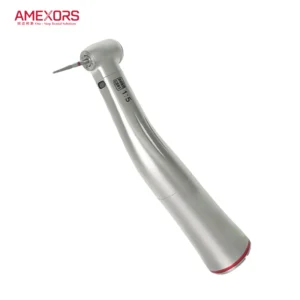
A low-speed handpiece system may use an air motor or electric motor connected to a straight or contra-angle attachment.
A simplified configuration is:
Motor → Attachment → Transmission → Chuck → Bur
The attachment determines how the motor’s rotational movement is delivered to the bur.
Contra-angle attachments are particularly useful because their angled geometry improves access to different areas of the oral cavity.
Depending on the system, attachments may also be designed for polishing, finishing, caries removal, prophylaxis, or other applications.
The exact speed and torque characteristics depend on the motor, attachment, transmission ratio, and operating conditions.
Air Turbine vs Electric Dental Handpiece: How Do They Work Differently?
The biggest difference is where rotational power originates.
| Working characteristic | Air Turbine Handpiece | Electric Handpiece |
|---|---|---|
| Primary power source | Compressed air | Electric motor |
| Main drive component | Turbine rotor | Motor |
| Rotation generation | Airflow drives turbine | Electromagnetic motor action |
| Transmission | Turbine directly drives rotating assembly | May use gears or transmission |
| Speed control | Influenced by air system and operating conditions | Electronically controlled by motor system |
| Torque characteristics | Generally lower under load | Generally more consistent under load |
| Typical system advantage | High speed and lightweight design | Controlled speed and torque |
| Main precision components | Rotor, bearings, spindle, chuck | Motor, gears, spindle, chuck |
The important point is that these are different mechanical architectures, not simply two versions of the same device. For a broader comparison of high-speed and low-speed systems, see our guide to High-Speed vs Low-Speed Dental Handpieces.
A high-speed air turbine is designed around extremely rapid turbine rotation.
An electric system is designed around motor control, transmission, and torque delivery.
What Is Torque in a Dental Handpiece?
Torque is the rotational force available from the handpiece.
RPM and torque describe different aspects of rotational performance.
RPM = how fast the rotating component turns
Torque = the rotational force available to turn it
A handpiece can have a high free-running speed but still experience a substantial reduction in speed when resistance is applied if its available torque is limited.
This is particularly relevant when comparing air turbine and electric systems.
Why Does Torque Matter Under Load?
A bur does not operate in a completely unloaded condition.
When the bur contacts the material being cut, resistance is applied to the rotating system.
The handpiece must respond to that load.
If the available torque is insufficient for the operating condition, rotational speed can decrease.
Therefore, evaluating a handpiece only by its maximum or free-running RPM can give an incomplete picture of performance.
Why Does High RPM Not Automatically Mean Better Cutting?
Cutting performance depends on more than rotational speed.
Other factors include:
- Bur geometry
- Bur condition
- Applied load
- Torque
- Turbine efficiency
- Bearing condition
- Spindle accuracy
- Cooling
- Air pressure or motor output
- Material being cut
A high-speed specification is therefore only one part of the performance equation.
What Are the Main Parts of a Dental Handpiece?
Although internal construction varies by design, a modern dental handpiece can be understood through several major component groups.
ComponentFunctionWhy It MattersHeadHouses the working mechanismAccess, visibility, balanceTurbine or motorGenerates rotationSpeed and powerRotorConverts airflow into rotation in air turbinesRotational efficiencyBearingsSupport rotating componentsSmoothness, vibration, durabilitySpindleTransfers rotational movementAlignment and stabilityChuckRetains the burBur security and concentricityO-rings / sealsSupport, seal, or damp internal movement depending on designStability and sealingAir channelsDeliver or exhaust airTurbine operationWater channelsDeliver coolantThermal controlCouplingConnects handpiece to the dental unitSystem compatibilityBodyHouses and protects internal componentsErgonomics and durability
ComponentFunctionWhy It MattersHeadHouses the working mechanismAccess, visibility, balanceTurbine or motorGenerates rotationSpeed and powerRotorConverts airflow into rotation in air turbinesRotational efficiencyBearingsSupport rotating componentsSmoothness, vibration, durabilitySpindleTransfers rotational movementAlignment and stabilityChuckRetains the burBur security and concentricityO-rings / sealsSupport, seal, or damp internal movement depending on designStability and sealingAir channelsDeliver or exhaust airTurbine operationWater channelsDeliver coolantThermal controlCouplingConnects handpiece to the dental unitSystem compatibilityBodyHouses and protects internal componentsErgonomics and durability
The exact construction differs between high-speed, low-speed, electric, surgical, and other specialized handpiece systems.
Why Is the Head Important?
The head contains the working mechanism and determines how the bur is positioned relative to the patient’s mouth.
Head dimensions can influence:
- Visibility
- Access
- Balance
- Ergonomics
- Bur positioning
- Spray coverage
A smaller head may improve access in some situations, while other designs may prioritize internal space, power, or mechanical robustness.
Why Are Bearings Important?
Bearings are responsible for supporting the rotating assembly.
Their performance affects:
- Rotational smoothness
- Vibration
- Noise
- Heat generation
- Mechanical wear
- Service life
The bearing should therefore be evaluated as part of the complete cartridge rather than as an isolated material choice.
For more detail, see Ceramic Bearings vs Steel Bearings for Dental Handpieces.
Why Is the Chuck Important?
The chuck connects the rotating mechanism to the bur.
It must maintain appropriate retention and alignment while allowing efficient bur changes.
Chuck precision also affects how concentrically the bur rotates.
Poor retention or excessive play can compromise operating stability.
What Do O-Rings Do?
O-rings can perform several functions depending on the handpiece design.
They may provide sealing, support internal components, or help damp movement and vibration within the turbine assembly.
Because their function depends on the specific cartridge construction, they should be evaluated according to the manufacturer’s design rather than treated as identical components across all handpieces.
How Does the Dental Handpiece Water Spray Work?
Many high-speed dental handpieces incorporate water spray systems to help control heat and clear debris during cutting.
The basic process is:
Water enters the handpiece → Internal water channel → Spray outlet → Working area
The exact arrangement varies by handpiece.
Some designs use multiple spray outlets positioned around the head to distribute coolant toward the bur and working area.
Why Is Cooling Important?
Rotational cutting generates heat.
Water spray helps manage heat at the working area and can also assist with debris removal and visibility.
The cooling system therefore works alongside the rotating mechanism.
It is not simply an additional feature attached to the handpiece.
What Affects Spray Performance?
Spray performance can be influenced by:
- Number of outlets
- Outlet position
- Water flow
- Air-water interaction
- Internal channel design
- Blockage or contamination
- Head geometry
This is why two handpieces with similar speed specifications can still have different cooling performance.
How Does the Air System Work?
Air serves different functions depending on the handpiece design.
In an air turbine system, drive air is responsible for rotating the turbine.
Additional air passages may be used for exhaust or spray functions.
The general flow is:
Dental unit → Connection → Internal air channel → Turbine → Exhaust
The efficiency of this airflow path depends on the internal design and operating conditions.
A restriction, leak, contamination, or poor connection can affect the performance of the system.
For air turbine handpieces, the quality of the turbine and the precision of the internal airflow path are therefore closely related.
Why Do Two Dental Handpieces With Similar RPM Perform Differently?
This is one of the most important questions for evaluating handpiece quality.
Two handpieces can have similar stated RPM specifications while producing different real-world operating characteristics.
The difference may come from:
Turbine Design
Rotor geometry, balance, and airflow efficiency influence how effectively compressed air is converted into rotation.
Bearing Quality
Bearings influence rotational smoothness, vibration, noise, and durability.
Spindle Precision
The spindle must maintain accurate alignment with the rotating axis.
Chuck Precision
The chuck affects bur retention and rotational stability.
Torque Characteristics
A handpiece must maintain useful rotational performance when resistance is applied.
Cooling Design
Effective water delivery helps manage heat during operation.
Manufacturing Tolerances
Precision machining and assembly affect how accurately the internal components work together.
Maintenance and Component Condition
Even a well-designed handpiece can lose performance when bearings, chuck components, seals, or other internal parts become worn or contaminated.
This is why RPM should never be treated as the only indicator of handpiece quality. For a more detailed evaluation of the engineering and manufacturing factors behind handpiece quality, see our Dental Handpiece Quality Guide.
What Determines Dental Handpiece Quality?
A high-quality dental handpiece is the result of multiple engineering decisions working together.
The most important areas include:
Manufacturing Precision
The dimensional accuracy of components affects alignment, balance, and mechanical stability.
Turbine or Motor Design
The drive system determines how efficiently the supplied power is converted into useful rotational movement.
Bearing System
The bearing system supports the rotating assembly and affects smoothness, vibration, and service life.
Chuck Performance
The chuck must retain compatible burs securely and maintain appropriate alignment.
Cooling System
The water spray system should provide appropriate coolant coverage for the intended application.
Material Selection
The materials used for the body and internal components must withstand the mechanical, thermal, and sterilization demands of the intended application.
Sterilization Resistance
Reusable dental handpieces may be subjected to repeated cleaning and sterilization cycles. Internal and external materials therefore need to be selected and assembled appropriately for the intended sterilization process.
Serviceability
Availability of replacement cartridges, bearings, chuck components, and other service parts can influence long-term ownership cost and product availability.
This is particularly important for distributors because product quality is not only about the initial sample. It is also about whether the same performance can be maintained across repeated production batches.
What Should Dental Distributors Evaluate in a Dental Handpiece?
For a distributor or importer, the evaluation should go beyond the headline RPM specification.
A practical evaluation should include:
1. Drive system
Is the product air turbine, air motor, or electric?
2. Performance specifications
What are the rated speed, operating conditions, and relevant torque characteristics?
3. Turbine or motor construction
What components are used and how are they manufactured?
4. Bearing system
What bearing configuration and materials are used?
5. Chuck
What bur-retention system is provided and what burs are compatible?
6. Cooling
How is water delivered to the working area?
7. Connection
Is the handpiece compatible with the intended dental unit or motor system?
8. Sterilization
What sterilization process and cycle specifications does the manufacturer support?
9. Replacement parts
Are cartridges, bearings, chuck components, and other service parts available?
10. Production consistency
Can the supplier maintain the same specifications and performance across production batches?
For distributors, this final point is especially important. For a more detailed purchasing framework, see our Dental Handpiece Buying Guide.
A technically impressive sample has limited commercial value if production consistency cannot be maintained.
Product evaluation is only one part of the sourcing process. Distributor and importer buyers should also evaluate supplier consistency, spare parts support, OEM capability, and long-term cooperation. See our guide on How to Choose the Right Dental Handpiece Supplier for a supplier-level evaluation framework.
What Should OEM and Private-Label Buyers Evaluate?
OEM buyers need to evaluate both the product itself and the supplier’s ability to reproduce the agreed specification consistently.
Important questions include:
- Can the supplier maintain consistent turbine performance?
- Are the internal components standardized?
- Can bearing specifications be controlled?
- Can the chuck configuration be customized?
- Are coupling options available?
- Can product specifications be documented?
- Can packaging and labeling be customized?
- Are replacement cartridges available?
- Can the supplier support long-term production?
- What quality-control procedures are used before shipment?
For an OEM brand, the objective is not simply to purchase a handpiece.
The objective is to establish a repeatable product specification that can be manufactured consistently under the brand’s requirements.
Once the required specifications are defined, buyers can review available handpiece configurations and product options. Explore our Dental Handpieces to compare available handpiece configurations and product specifications.
Distributor and importer buyers should also evaluate supplier consistency, spare parts support, OEM capability, and long-term cooperation. See our guide on How to Choose the Right Dental Handpiece Supplier for a supplier-level evaluation framework.
If you are sourcing dental handpieces from China, see our guide on How to Choose a Dental Handpiece Manufacturer in China.
Dental Handpiece FAQs
What is a dental handpiece?
A dental handpiece is a handheld rotary instrument that converts air pressure or electrical power into rotational motion to drive a compatible bur or other working instrument.
How does a dental handpiece work?
A dental handpiece receives power from a dental unit or motor system, converts that power into rotation, supports the rotating assembly with precision components, and transfers the rotation through the chuck to the bur.
What makes a high-speed dental handpiece rotate?
A high-speed air turbine handpiece uses compressed air to drive a turbine rotor located inside the head. The turbine rotates the spindle and chuck, which then rotate the bur.
What makes an electric dental handpiece rotate?
An electric handpiece uses an electric motor to generate rotational movement. The motor output may then be transferred directly or through a transmission or gear system to the working instrument.
What are the main parts of a dental handpiece?
Common components include the head, turbine or motor, rotor, bearings, spindle, chuck, air and water channels, connection system, and body. The exact construction depends on the handpiece type.
What is a dental handpiece cartridge?
A cartridge is a replaceable internal rotating assembly used in many dental handpieces. Depending on the design, it may contain the rotor, spindle, chuck, bearings, and supporting components.
What is dental handpiece torque?
Torque is the rotational force available from the handpiece. It describes how the rotating system responds when resistance or load is applied.
Why are bearings important in a dental handpiece?
Bearings support the rotating assembly and help maintain stable rotation. Their condition and quality can affect vibration, noise, smoothness, and service life.
Why does RPM not tell the whole story?
RPM describes rotational speed, but it does not fully describe torque, load performance, vibration, cooling, bur retention, or mechanical precision. These factors can significantly affect actual handpiece performance.
How does a dental handpiece hold a bur?
The chuck or bur-retention mechanism holds the compatible bur inside the rotating assembly. Different handpieces use different retention mechanisms, including push-button and other chuck configurations.
How does the water spray work?
Water travels through internal channels to spray outlets near the handpiece head. The spray helps control heat and may assist with debris removal and visibility during cutting.
Why can two handpieces with the same RPM perform differently?
Differences in turbine design, bearing quality, spindle precision, chuck accuracy, torque, cooling, manufacturing tolerances, and operating conditions can produce different performance even when stated RPM values are similar.
Are air turbine and electric handpieces the same?
No. An air turbine handpiece uses compressed air to drive a turbine, while an electric system uses an electric motor to generate rotational power. Their internal mechanisms and performance characteristics are different.
Conclusion
A dental handpiece is a precision mechanical system rather than simply a device that spins a dental bur.
The complete working principle can be summarized as:
Power source → Drive mechanism → Rotating assembly → Bearings → Spindle → Chuck → Bur
In an air turbine handpiece, compressed air drives the turbine rotor inside the head.
In an electric system, an electric motor generates rotational power that may be transferred through gearing or another transmission mechanism.
The components then work together to control rotation, retain the bur, manage heat, and deliver the required working performance.
This is why evaluating a dental handpiece requires more than comparing RPM.
Turbine or motor design, bearing quality, spindle accuracy, chuck performance, torque, cooling, manufacturing precision, sterilization resistance, and serviceability all contribute to the final product.
For dental professionals, understanding these mechanisms helps explain differences in handpiece performance.
For distributors, importers, and OEM brands, the same knowledge provides a more reliable framework for evaluating products, comparing suppliers, and building consistent product specifications.