High-Speed vs. Low-Speed Dental Handpieces: Complete Comparison Guide
Discover the key differences between high-speed and low-speed dental handpieces, including speed, applications, advantages, and how to choose the right handpiece for your clinic or dental business.
High Speed vs. Low Speed Dental Handpieces: What’s the Difference?
Introduction
Choosing the right dental handpiece is essential for both clinical efficiency and treatment quality. Whether you are a dental clinic selecting equipment or a distributor expanding your product portfolio, understanding the differences between high-speed and low-speed dental handpieces helps ensure the right solution for every procedure.
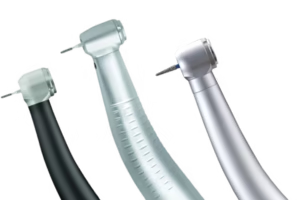
Although both are indispensable in daily dental practice, they are designed for completely different clinical purposes. High-speed handpieces are built for cutting hard tooth structures quickly, while low-speed handpieces provide greater torque and precision for finishing, polishing, endodontic procedures, and laboratory work.
This guide explains their working principles, applications, advantages, limitations, and how to choose the right option for your business or practice.
What Is a High-Speed Dental Handpiece?
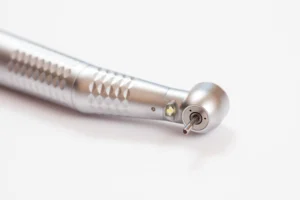
A high-speed dental handpiece is an air turbine instrument capable of rotating between 300,000 and 450,000 RPM, making it one of the fastest instruments used in dentistry.
Instead of generating high torque, it relies on extremely high rotational speed to remove enamel and dentin efficiently while minimizing treatment time.
Typical Applications
- Tooth preparation for crowns and bridges
- Caries removal
- Cavity preparation
- Sectioning teeth during extraction
- Removing old restorations
- Crown cutting
Key Features
- Extremely high rotational speed
- Air-driven turbine
- Water spray cooling system
- Lightweight design
- Push-button bur changing system
- Excellent cutting efficiency
What Is a Low-Speed Dental Handpiece?
A low-speed dental handpiece operates at significantly lower rotational speeds, typically ranging from 5,000 to 40,000 RPM, depending on the motor and gear ratio.
Unlike high-speed models, low-speed handpieces emphasize torque and control rather than cutting speed.
They are commonly used together with electric or air motors and various attachments, including contra-angle and straight handpieces.
Typical Applications
- Polishing restorations
- Finishing composite fillings
- Prophylaxis
- Endodontic procedures
- Implant maintenance
- Denture adjustments
- Laboratory trimming
Key Features
- Higher torque
- Better tactile control
- Multiple attachment options
- Suitable for polishing and finishing
- Lower operating noise
High-Speed vs. Low-Speed Dental Handpieces
Feature | High-Speed | Low-Speed |
|---|---|---|
Speed | 300,000–450,000 RPM | 5,000–40,000 RPM |
Torque | Lower | Higher |
Power Source | Air Turbine | Air Motor / Electric Motor |
Cooling | Water Spray Required | Usually Optional |
Main Purpose | Cutting Hard Tissue | Finishing, Polishing & Precision Work |
Noise Level | Higher | Lower |
Heat Generation | Higher | Lower |
Which Procedures Require a High-Speed Handpiece?
High-speed handpieces are ideal whenever fast cutting is required.
Typical treatments include:
- Crown preparation
- Bridge preparation
- Enamel reduction
- Caries excavation
- Tooth sectioning
- Removing existing restorations
Their efficiency significantly reduces chair time and improves patient comfort during restorative procedures.
Which Procedures Require a Low-Speed Handpiece?
Low-speed handpieces are preferred whenever precision is more important than speed.
Typical procedures include:
- Composite polishing
- Finishing restorations
- Root canal treatment
- Prophylaxis
- Implant maintenance
- Denture adjustment
Because they generate greater torque at lower speeds, clinicians achieve better control during delicate procedures.
Advantages and Limitations
High-Speed Dental Handpieces
Advantages
- Fast cutting efficiency
- Reduced treatment time
- Excellent access to posterior teeth
- Smooth preparation surfaces
- Improved clinical productivity
Limitations
- Higher noise
- Requires water cooling
- Less torque
- Higher air consumption
Low-Speed Dental Handpieces
Advantages
- Better precision
- Higher torque
- Lower operating noise
- Greater versatility
- Suitable for multiple attachments
Limitations
- Slower cutting speed
- Not suitable for enamel preparation
- Longer procedure time for hard tissue removal
How to Choose the Right Dental Handpiece
The right choice depends on your clinical requirements or market positioning.
Consider the following factors:
Clinical Application
Select high-speed handpieces for cutting procedures and low-speed systems for finishing, polishing, and precision work.
Bearing Quality
Ceramic bearings generally offer longer service life, lower vibration, and quieter operation compared with standard steel bearings.
Head Size
Mini heads provide improved visibility in posterior areas, while standard heads offer greater cutting efficiency.
Water Spray System
A multi-port water spray helps maintain consistent cooling and reduces thermal damage during tooth preparation.
Chuck System
Push-button chuck systems improve efficiency and simplify bur replacement.
Compatibility
Ensure compatibility with 2-hole or 4-hole couplings and existing clinical equipment.
Frequently Asked Questions
Can a low-speed handpiece replace a high-speed handpiece?
No. They serve different clinical purposes. High-speed handpieces are designed for cutting hard tissues, while low-speed handpieces are intended for polishing, finishing, and precision procedures.
Why do dentists need both?
Most restorative treatments require both instruments. A high-speed handpiece prepares the tooth, while a low-speed handpiece completes finishing and polishing.
Which handpiece lasts longer?
Service life depends more on bearing quality, maintenance, sterilization practices, and manufacturing standards than on operating speed.
Are ceramic bearings worth choosing?
For clinics with high daily workloads, ceramic bearings generally provide improved durability, lower noise, and smoother operation.
Conclusion
High-speed and low-speed dental handpieces are complementary rather than competing instruments. High-speed models deliver rapid cutting performance for restorative procedures, while low-speed systems provide the precision, torque, and control required for finishing, polishing, and specialty treatments.
Understanding these differences helps dental professionals choose equipment that improves efficiency, treatment quality, and long-term reliability.
Whether you are sourcing products for a dental clinic, distributor network, or private label program, selecting high-quality handpieces with reliable bearings, stable performance, and compatible configurations is essential for long-term success.