LED Curing Lights Explained: What Buyers Should Know
LED curing lights have become an essential tool in modern restorative dentistry. From composite restorations to bonding procedures, proper light curing directly affects treatment success. This guide explains how LED curing lights work, the key specifications buyers should understand, and the factors distributors and clinicians should consider when evaluating different curing light systems.
LED Curing Lights Explained: What Buyers Should Know
LED curing lights are among the most commonly used devices in dental clinics today.
Whether placing composite restorations, bonding orthodontic brackets, or performing cosmetic procedures, clinicians rely on curing lights to achieve predictable and durable results.
Despite their widespread use, many buyers focus primarily on price or advertised power output while overlooking other important performance factors.
Understanding how curing lights work can help distributors, importers, and dental professionals make more informed purchasing decisions.
This article explores the fundamentals of LED curing technology and highlights the key considerations when evaluating curing light systems.
What Is a Dental LED Curing Light?
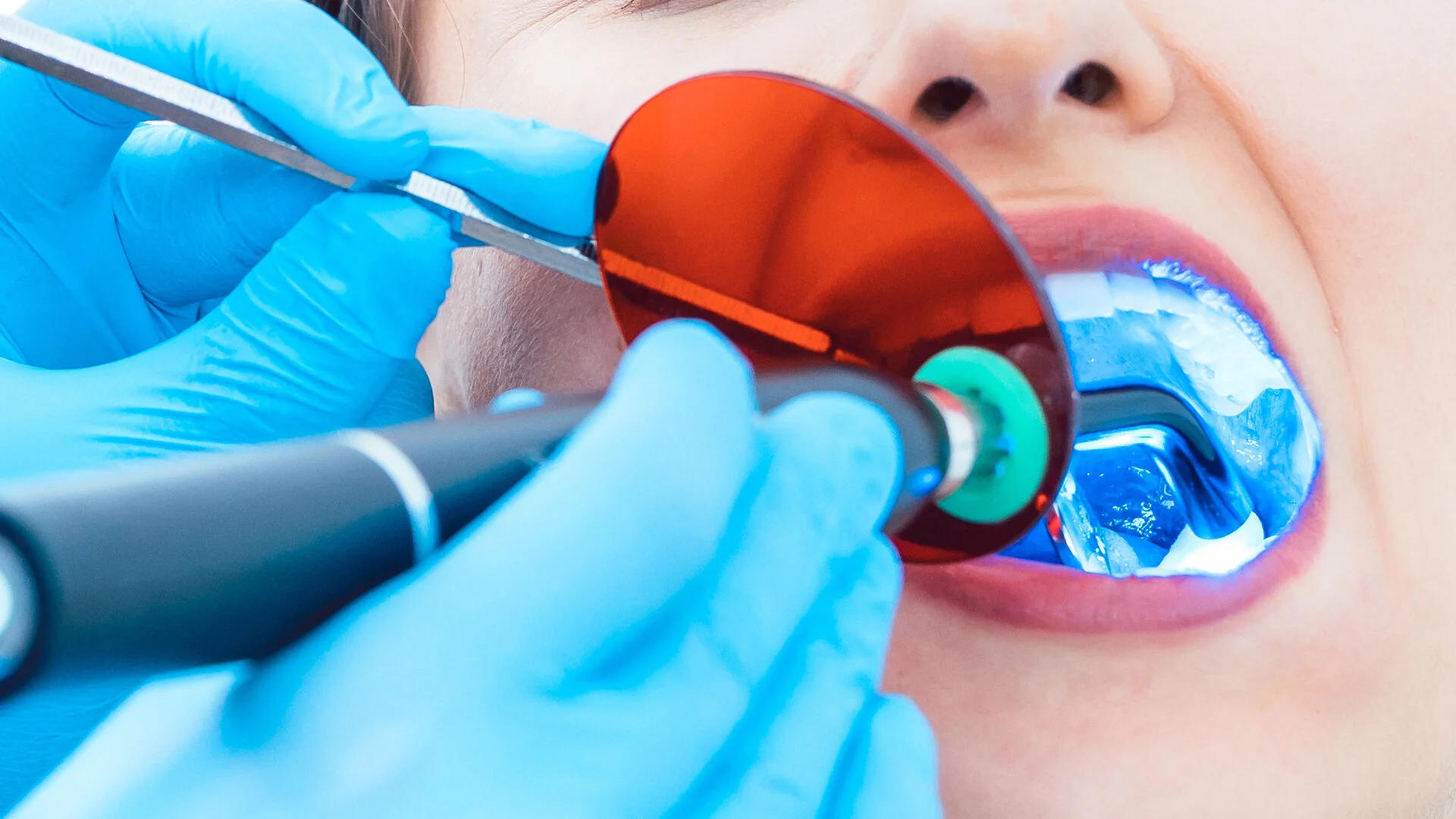
A dental LED curing light is a device that emits a specific wavelength of blue light used to polymerize light-cured dental materials.
These materials include:
- Composite resins
- Adhesives
- Bonding agents
- Sealants
- Certain cements
Without adequate light curing, restorative materials may not achieve their intended physical properties, potentially affecting treatment outcomes.
Why Proper Curing Matters
The purpose of curing is to activate photoinitiators within dental materials.
When exposed to the correct wavelength, these photoinitiators trigger a chemical reaction that hardens the material.
Proper curing contributes to:
- Improved restoration strength
- Better wear resistance
- Reduced microleakage
- Enhanced longevity
- Greater patient satisfaction
Insufficient curing can lead to premature restoration failure and additional clinical complications.
How LED Curing Lights Work
Modern curing lights use light-emitting diode (LED) technology.
The device generates blue light within a specific wavelength range that activates common dental photoinitiators.
Most modern curing lights operate within:385nm – 515nm
The emitted light is directed toward the restorative material through an optical lens system.
As the material absorbs the light energy, polymerization begins and the material hardens.
Understanding Wavelength
Wavelength is one of the most important specifications in a curing light.
Different dental materials may contain different photoinitiators.
The most common photoinitiator is:
Camphorquinone (CQ)
CQ is activated primarily within the blue light spectrum around:468nm
Many modern materials may also contain additional photoinitiators that require broader wavelength coverage.
For this reason, some manufacturers offer:
Monowave Curing Lights
Designed primarily around CQ activation.
Polywave Curing Lights
Provide a broader wavelength spectrum to support multiple photoinitiator systems.
Understanding Light Intensity
Another specification frequently discussed is light intensity.
It is commonly measured in:mW/cm²
Manufacturers often promote higher intensity values as a selling point.
However, intensity alone does not determine curing effectiveness.
Other factors include:
- Wavelength compatibility
- Beam uniformity
- Exposure time
- Distance from restoration
- Material thickness
A balanced combination of these factors is more important than simply choosing the highest advertised power output.
Cordless vs Corded Curing Lights
Most modern systems are cordless.
Cordless Models
Advantages:
- Greater mobility
- Improved ergonomics
- Cleaner clinical workflow
Considerations:
- Battery maintenance
- Charging requirements
Corded Models
Advantages:
- Continuous operation
- No battery dependency
Considerations:
- Reduced mobility
- Less common in modern clinics
Today, cordless LED curing lights dominate most markets.
Features Buyers Should Evaluate
When comparing curing light systems, consider more than just price.
Output Stability
Consistent light output contributes to predictable curing performance.
Battery Performance
Long battery life improves clinical efficiency.
Ergonomic Design
Lightweight devices can reduce operator fatigue.
Timer Functions
Multiple curing modes provide flexibility for different procedures.
Light Guide Quality
Optical design influences light transmission efficiency.
Durability
Reliable construction supports long-term clinical use.
Common Questions from Distributors
Distributors often evaluate curing lights based on:
- Market demand
- Product reliability
- OEM possibilities
- Packaging quality
- Certification availability
- Warranty support
In many markets, curing lights remain a popular entry point for distributors expanding their clinical equipment portfolio.
Common Questions from Clinics
Clinicians typically focus on:
- Ease of use
- Curing effectiveness
- Battery performance
- Weight and ergonomics
- Reliability
- Maintenance requirements
Choosing the right curing light can improve workflow efficiency and contribute to better treatment outcomes.
OEM and Private Label Opportunities
LED curing lights are frequently used in OEM and private label programs.
Common customization options may include:
- Logo printing
- Customized packaging
- User manuals
- Product labeling
For distributors seeking to establish their own brand, curing lights often represent an attractive product category due to their broad market demand and relatively compact size.
How to Choose the Right LED Curing Light
Before making a purchasing decision, consider the following questions:
- Is the wavelength range suitable for your target materials?
- Is the light output stable and consistent?
- Does the device offer ergonomic advantages?
- Is after-sales support available?
- Can the supplier provide OEM services if required?
- Does the product fit your target market positioning?
Evaluating these factors together provides a more complete picture than comparing specifications alone.
LED curing lights play a critical role in modern restorative dentistry. While many products appear similar on the surface, important differences exist in wavelength coverage, light output stability, ergonomics, and overall reliability.
By understanding the fundamentals of curing technology and evaluating products beyond simple power ratings, distributors and clinicians can make more informed purchasing decisions and achieve better long-term results.
- What Is a Dental LED Curing Light?
- Why Proper Curing Matters
- How LED Curing Lights Work
- Understanding Wavelength
- Understanding Light Intensity
- Cordless vs Corded Curing Lights
- Features Buyers Should Evaluate
- Common Questions from Distributors
- Common Questions from Clinics
- OEM and Private Label Opportunities
- How to Choose the Right LED Curing Light