Rotary vs Reciprocating Files: What’s the Difference?
Compare rotary and reciprocating endodontic files, including their motion, fatigue resistance, instrumentation workflow, and motor compatibility. Learn which factors matter when evaluating NiTi file systems for root canal preparation.
Rotary vs. Reciprocating Files: What’s the Difference?
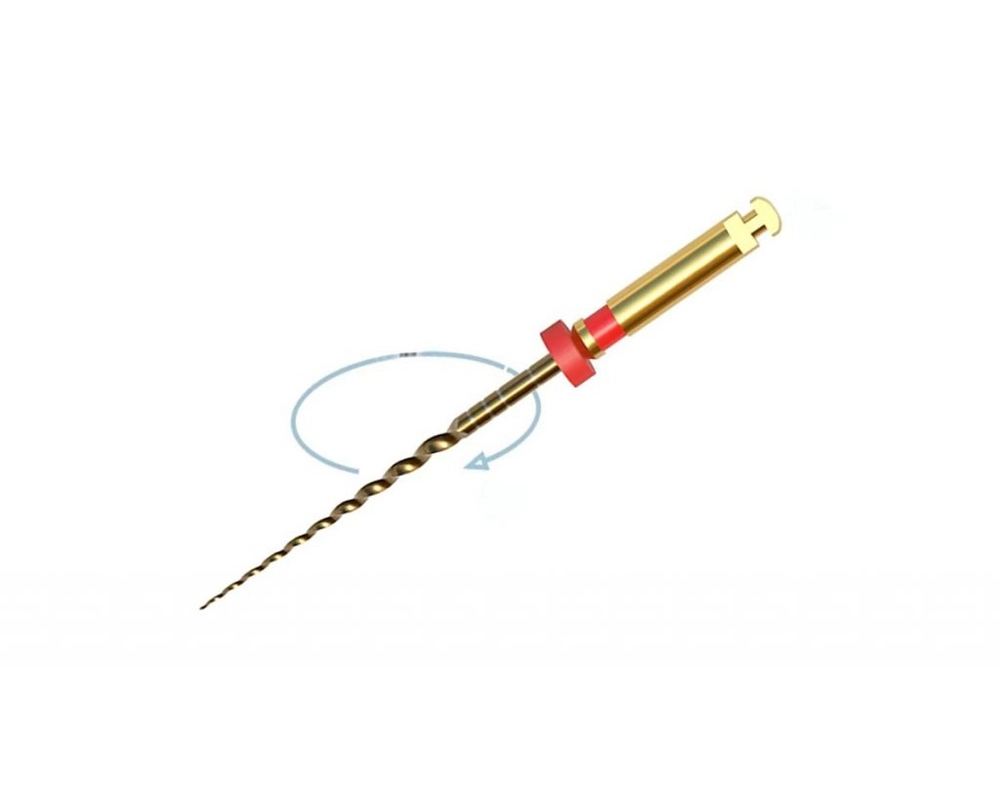
Rotary and reciprocating files are two widely used approaches to mechanical root canal preparation. The main difference is how the instrument moves inside the root canal: rotary files rotate continuously in one direction, while reciprocating files alternate between cutting and reverse rotational movements.
However, motion is only one part of the comparison. Instrument design, nickel-titanium (NiTi) alloy, heat treatment, taper, cross-sectional geometry, and the operating program can all influence how a file performs.
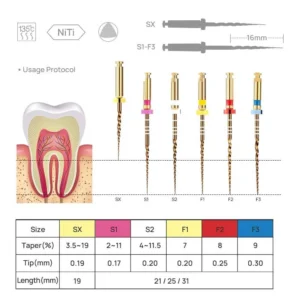
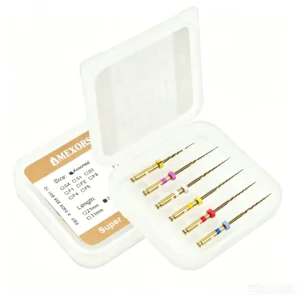
For a basic introduction to the instrument itself, see our guide to what a NiTi rotary file is.
For dental professionals evaluating endodontic instruments, understanding these differences helps clarify what each system offers, where its limitations lie, and which factors matter when selecting a file system.
What Is the Difference Between Rotary and Reciprocating Files?
The fundamental difference between rotary and reciprocating files is their rotational movement during canal preparation.
Rotary files use continuous rotation in one direction. Reciprocating files alternate between rotation in a cutting direction and a reverse movement that partially releases the instrument.
| Comparison factor | Rotary files | Reciprocating files |
|---|---|---|
| Motion | Continuous rotation in one direction | Alternating rotational movement |
| Operating program | Continuous-rotation mode | Compatible reciprocating mode |
| Instrumentation sequence | May use multiple files or a single-file approach | Often associated with single-file systems, but not exclusively |
| Cyclic fatigue | Depends on motion, alloy, geometry, and test conditions | Reciprocation can improve fatigue resistance under certain test conditions |
| Torsional stress | Depends on instrument engagement, canal anatomy, and technique | Reverse movement may help release the instrument, but does not eliminate torsional stress |
| Workflow | Depends on the system’s prescribed sequence | May simplify the number of shaping instruments required |
| Compatibility | Requires a suitable motor and operating program | Requires a motor that supports the specified reciprocating program |
Neither motion type is automatically superior in every situation. The comparison should account for the specific instrument system and its intended operating conditions rather than relying on the movement pattern alone.
1. How Do Rotary Files Work?
Rotary files rotate continuously in one direction, typically under the control of an endodontic motor.
During root canal preparation, the instrument rotates while engaging dentin along the canal walls. Its cutting efficiency and shaping behavior depend on several factors, including the file’s taper, cross-sectional design, cutting edges, alloy properties, and operating parameters.
When comparing available NiTi rotary files, consider the complete instrument configuration rather than evaluating rotational motion alone.
Key characteristics of rotary files
Continuous rotational movement
The file maintains rotation in one direction during operation. The instrument’s design and prescribed technique determine how it engages dentin and advances through the canal.
Flexible instrumentation sequences
Rotary systems can use a sequence of instruments with different sizes and tapers to progressively prepare the canal. Some rotary systems also use a single shaping file, so continuous rotation should not be equated with a mandatory multi-file sequence.
Design-dependent performance
Two rotary files may behave differently even when operated in the same motion mode. Alloy treatment, cross-sectional geometry, core dimensions, taper, and manufacturing processes can influence flexibility, cutting behavior, and fatigue resistance.
Limitations to consider
Continuous rotation does not prevent instrument separation. A file can experience cyclic fatigue when repeatedly flexed in a curved canal, or torsional overload when part of the instrument binds while the shaft continues to rotate.
Safe use therefore depends on appropriate case selection, glide path preparation when indicated, instrument inspection and replacement, and compliance with the manufacturer’s instructions.
2. How Do Reciprocating Files Work?
Reciprocating files alternate between rotational movements in opposite directions rather than continuously rotating in one direction.
The instrument moves through a prescribed cutting angle and a reverse angle. The exact angles, speed, and movement sequence depend on the system and its operating program.
Key characteristics of reciprocating files
Alternating movement
The instrument repeatedly changes rotational direction. The cutting and reverse angles are designed to support the intended instrumentation technique.
Potentially simplified shaping sequences
Many reciprocating systems are designed around a single primary shaping file. This can reduce the number of shaping instruments used during the procedure, although irrigation, glide path preparation, and other steps may still be required.
Potential fatigue-resistance advantages
Under certain laboratory conditions, reciprocating movement has demonstrated greater cyclic fatigue resistance than continuous rotation. However, the result depends on the instruments compared and the testing method.
Limitations to consider
Reciprocating movement does not eliminate instrument separation, torsional overload, or other procedural risks. The instrument can still bind in the canal, and its performance depends on the specific design, operating parameters, and clinical technique.
Reciprocating files must be used with a compatible motor and the operating program specified by the manufacturer. A reciprocating instrument should not be assumed to be suitable for continuous rotation, or vice versa.
3. Rotary vs. Reciprocating Files: Key Performance Differences
The practical differences between the two approaches are best evaluated by examining specific performance factors rather than assigning one system a universal advantage.
Cyclic fatigue resistance
Cyclic fatigue develops when an instrument undergoes repeated tensile and compressive stresses as it rotates or moves within a curved canal. Repeated loading can eventually lead to fracture.
A 2024 systematic review and meta-analysis by De Pedro-Muñoz and colleagues compared the cyclic fatigue resistance of rotary and reciprocating endodontic files in laboratory studies.
The review found a statistically significant difference favoring reciprocating systems when fatigue resistance was measured by the number of cycles to fracture. However, the comparison based on time to fracture did not show a statistically significant difference between the movement groups.
These findings suggest that reciprocating motion can provide a cyclic fatigue-resistance advantage under particular test conditions. They do not establish that every reciprocating file will outperform every rotary file.
The researchers also noted that alloy characteristics and instrument design can substantially influence fatigue resistance.
Heat treatment is another material-related factor worth considering. Learn more about how heat treatment influences file flexibility.
What this means: When evaluating file systems for curved canals, consider the evidence for the specific instrument, its geometry, and its material properties. Motion type alone is not a sufficient predictor of performance.
Reference: De Pedro-Muñoz A, et al. Cyclic Fatigue Resistance of Rotary versus Reciprocating Endodontic Files: A Systematic Review and Meta-Analysis. Journal of Clinical Medicine. 2024;13(3):882. https://doi.org/10.3390/jcm13030882
Torsional stress and instrument separation
Torsional stress occurs when the tip or another part of the file becomes locked against the canal wall while the rest of the instrument continues to rotate or attempts to advance.
Reciprocating movement includes a reverse component that may help release the instrument during cutting. However, it does not remove the possibility of binding or torsional overload.
The risk of instrument separation is influenced by several interacting factors, including canal anatomy, instrument size, taper, cross-sectional geometry, alloy properties, operating parameters, and operator technique.
What this means: Do not use reciprocating movement as a substitute for proper instrumentation technique. Follow the system’s instructions and avoid applying excessive apical pressure.
Cutting efficiency and canal shaping
Both rotary and reciprocating files are designed to shape root canals, but their cutting behavior depends on the instrument’s geometry and operating conditions.
Relevant design factors include:
- Cross-sectional shape and core dimensions
- Cutting-edge design
- Tip configuration
- Taper and instrument size
- Alloy composition and heat treatment
The movement pattern is one part of the overall system. A comparison between two commercial file systems may reflect differences in both movement and instrument design, making it difficult to attribute every observed performance difference to kinematics alone.
What this means: When comparing products, examine their specifications and supporting evidence instead of assuming that all files using the same motion will perform identically.
Instrumentation workflow
Rotary systems are available in both multi-file and single-file configurations. A prescribed sequence may involve progressive shaping with several instruments, depending on the system.
Many reciprocating systems are designed to simplify shaping through the use of a single primary file. This may reduce the number of shaping instruments needed, but it does not necessarily mean that the complete treatment procedure is shorter or simpler in every case.
Other procedural steps, including access preparation, glide path management when indicated, irrigation, and canal assessment, remain important.
What this means: When workflow is a priority, compare the complete instrumentation protocol rather than counting shaping files alone.
Motor compatibility
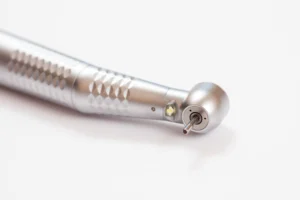
Rotary and reciprocating systems may require different motor operating programs.
Rotary instruments are used with the continuous-rotation settings specified for the system. Reciprocating instruments require a compatible reciprocating program with the prescribed angles and operating parameters.
Before selecting a file system, confirm that the endodontic motor supports its required operating mode and settings.
What this means: Compatibility should be checked at the system level. The instrument’s design and the motor’s operating program must match the manufacturer’s instructions.
4. Which Is Better: Rotary or Reciprocating Files?
There is no universal answer. The more appropriate choice depends on the specific file system, clinical requirements, operating protocol, and the user’s familiarity with the technique.
For a more detailed evaluation of file size, taper, instrument design, and system requirements, read our guide on how to choose a NiTi rotary file system.
When evaluating a rotary system
Consider a rotary system when its prescribed instrumentation sequence, instrument sizes, taper options, and operating protocol fit the intended workflow.
Evaluate the complete file sequence, the requirements for each stage of preparation, motor compatibility, and the available evidence for the specific instruments.
When evaluating a reciprocating system
Consider a reciprocating system when its prescribed motion and shaping protocol fit the intended workflow.
Review the required motor program, the design of the primary shaping file, any additional instruments required by the protocol, and the manufacturer’s instructions for use.
Questions to ask before selecting a system
Regardless of movement type, evaluate the following:
- Does the instrument system fit the intended clinical application?
- Is the motor compatible with the required operating mode and parameters?
- What are the file’s taper, size, cross-sectional geometry, and material characteristics?
- What preparation steps and additional instruments does the protocol require?
- What evidence supports the instrument’s performance under relevant conditions?
- What inspection, replacement, and usage requirements are specified by the manufacturer?
These questions provide a more useful basis for comparing systems than choosing solely according to whether the instrument rotates continuously or reciprocates.
5. Common Misconceptions About Rotary and Reciprocating Files
Are reciprocating files always safer than rotary files?
No. Reciprocating motion may improve cyclic fatigue resistance under certain laboratory conditions, but instrument separation depends on multiple factors. Neither movement type eliminates procedural risks.
Do rotary files always require multiple instruments?
No. Although many rotary systems use a sequence of instruments, single-file rotary systems also exist. The number of instruments depends on the system’s design and prescribed protocol.
Are reciprocating files always single-file systems?
No. Single-file instrumentation is common in reciprocating systems, but the movement pattern and the number of instruments are separate characteristics.
Can rotary files be used in reciprocating mode?
Not automatically. A file should only be used with the operating mode and parameters specified by its manufacturer. Do not assume that a file designed for continuous rotation is suitable for reciprocating movement.
Does heat treatment determine whether a file is rotary or reciprocating?
No. Heat treatment is a material-processing characteristic, while rotary and reciprocating describe movement patterns. NiTi instruments with different heat treatments may be designed for either movement type, depending on the product.
Which type is better for curved canals?
Neither movement type guarantees better clinical outcomes in every curved canal. Laboratory evidence suggests that reciprocating movement can offer a cyclic fatigue-resistance advantage under certain conditions, but instrument design, canal anatomy, technique, and the manufacturer’s protocol remain important.
Conclusion
Rotary and reciprocating files differ primarily in their movement patterns, but their practical performance depends on more than motion alone.
Rotary systems use continuous rotation and may offer structured multi-file or single-file workflows. Reciprocating systems alternate rotational directions and are often designed to simplify shaping sequences. Research suggests that reciprocating motion can improve cyclic fatigue resistance under certain laboratory conditions, although the findings should not be generalized to every instrument or clinical situation.
When comparing endodontic file systems, evaluate instrument design, alloy and heat treatment, taper, motor compatibility, workflow requirements, and the evidence supporting the specific product. The most appropriate system is the one that fits the intended application and can be used according to its prescribed protocol.
Explore the full range of endodontic products available from AMEXORS.
For a broader overview of available instrument types, explore AMEXORS’ NiTi Rotary Files collection and Endodontic Products range.