How to Choose a 1:5 Red Ring Dental Handpiece? A Practical Buying Guide
Choosing a 1:5 red ring dental handpiece involves more than checking its maximum speed. Learn how to compare electric and air-turbine handpieces, verify motor and E-Type connection compatibility, evaluate fiber optic and water spray configurations, and select the right specifications for your clinic or distribution business.
How to Choose a 1:5 Red Ring Dental Handpiece? A Practical Buying Guide
When choosing a 1:5 red ring dental handpiece, the first question is not its maximum rotational speed, but whether this type of handpiece suits your existing equipment and everyday working requirements.
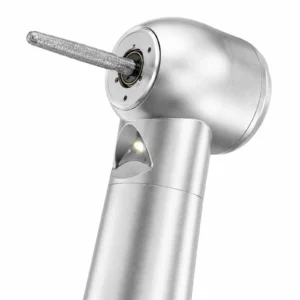
A 1:5 speed increasing handpiece is typically driven by an electric dental motor. Its internal gear mechanism increases the motor’s output speed. For dental clinics already equipped with a compatible electric motor, this type of handpiece may be worth considering when speed control and performance under load are important factors.
However, if a clinic has always used conventional air-turbine handpieces and its existing equipment meets daily requirements, switching to an electric motor-driven system may not be necessary.
For dental distributors, importers, and private-label buyers, the decision also involves equipment compatibility, product configuration, maintenance, and consistency across repeat orders.
This guide explains the differences between a 1:5 speed increasing handpiece and a conventional air turbine handpiece, the key specifications to consider when choosing a model, and what buyers should know about the AMEXORS 1:5 fiber optic contra angle handpiece.
1. Should You Choose a 1:5 Speed-Increasing Handpiece?
Before comparing individual products, it is worth deciding whether an electric speed-increasing handpiece is the right choice for your existing equipment and working needs.
When a 1:5 Handpiece Makes Sense
If your clinic already has an electric dental motor, a 1:5 speed increasing handpiece may be a natural option.
An electric motor provides the required input speed and power, while the 1:5 gear mechanism increases the handpiece’s output speed. For users who pay attention to speed control, cutting performance under load, and the operating characteristics of the motor system, this configuration is worth evaluating.
For example, during tooth preparation for crowns and other restorative procedures, clinicians may consider how rotational speed responds to changing loads and how the motor and foot control system behave during use. When paired with a compatible electric motor, a 1:5 speed increasing handpiece can meet the requirements of users looking for this type of high-speed cutting configuration.
Actual performance, however, depends on the specific handpiece and motor model. A 1:5 gear ratio alone does not prove that a particular product delivers higher cutting efficiency or better clinical performance.
For clinics already using an electric motor system, selecting a compatible 1:5 contra angle handpiece may also be more practical than investing in an entirely different drive system.
When a Conventional Air-Turbine Handpiece May Be More Practical
If a clinic primarily uses conventional air-turbine handpieces, its existing dental unit, air supply, connections, and working routines may already be well suited to that system. In this situation, continuing with an air-turbine handpiece is often the more straightforward option.
Air-turbine handpieces are generally known for their lightweight handpiece design and are often easier to replace within an existing pneumatic setup. For clinics without an electric dental motor, and with no plans to upgrade their equipment, purchasing a motor system solely to use a 1:5 speed increasing handpiece may add unnecessary cost.
The choice between these two systems is therefore not simply a matter of ranking one above the other. The more useful questions are: What drive system does the clinic already use? What type of speed and power control does its work require? And will the change deliver enough practical value to justify the investment?
2. 1:5 Speed Increasing Handpiece vs. Air Turbine Handpiece
Both types of handpieces can be used for high-speed rotary cutting, but they differ in their power sources and operating principles. Understanding these differences is an important part of choosing the right product.
| Comparison | 1:5 Speed Increasing Handpiece | Air-Turbine High-Speed Handpiece |
|---|---|---|
| Drive system | Compatible electric dental motor | Compressed-air-driven turbine |
| How speed is generated | Internal gears increase the motor’s output speed | Compressed air drives the turbine rotor |
| Speed under load | Depends on motor control, transmission design, and working load | Rotational speed typically decreases as cutting load increases |
| Equipment requirements | Requires a compatible motor, connection, and supporting functions | Requires a compatible air supply and handpiece connection |
| Handling | Depends on handpiece design, weight, and the overall system | Commonly valued for its lightweight handling |
| Main purchasing considerations | Motor compatibility, gear ratio, rated speed, and configuration | Air supply, connection type, turbine performance, and configuration |
| Users who may benefit most | Users with a compatible electric motor who value its operating and control characteristics | Users with existing pneumatic equipment who want a straightforward replacement or to limit additional equipment costs |
These are typical differences between the two drive systems, not absolute conclusions about every model. Specific speed, torque, weight, and operating performance should be verified against the manufacturer’s technical documentation.
If you are comparing different handpiece types, explore the full range of dental handpieces for clinics and distributors available from AMEXORS.
Once you have decided that an electric speed-increasing handpiece is appropriate, you can compare the gear ratio, connection, lighting, bur compatibility, and other specifications.
3. What Does 1:5 Mean, and What Does the Red Ring Indicate?
Understanding the 1:5 Gear Ratio
A 1:5 gear ratio means that the transmission increases rotational speed by a factor of five. Under the relevant operating conditions, the handpiece’s output speed is theoretically five times the motor’s input speed.
For example:
- Motor input speed: 40,000 RPM
- Handpiece gear ratio: 1:5
- Theoretical output speed: 200,000 RPM
This calculation does not mean that the handpiece will reach this speed under every operating condition. The actual permitted operating speed depends on the handpiece’s rated specifications, motor performance, and the working conditions specified by the manufacturer.
When comparing different models, check both the motor’s input speed and the handpiece’s maximum permitted output speed. Do not estimate a product’s actual performance from the gear ratio alone.
What Does the Red Ring Mean?
A red ring is commonly used to identify a speed-increasing dental contra angle handpiece, with 1:5 models being a common example.
However, color coding should only be used as an initial identification guide. The exact specifications must still be confirmed through the product model and manufacturer documentation.
A red ring alone does not tell you whether the handpiece has fiber optic illumination, which water spray configuration it uses, which burs it accepts, or whether it is compatible with a particular electric motor.
If you are looking for a replacement 1:5 handpiece, verify the model, gear ratio, and manufacturer specifications rather than relying solely on its appearance or color.
4. How to Choose the Right 1:5 Dental Handpiece
Once you have established that a 1:5 speed increasing handpiece suits your existing equipment, begin with compatibility and then compare the other features in a logical order.
Motor Compatibility and Connection
This is the first issue to resolve when evaluating 1:5 handpiece compatibility.
A typical 1:5 speed increasing handpiece requires a compatible electric dental motor. Even if two products both use an E-Type connection, the matching interface alone does not guarantee full compatibility.
Before purchasing, confirm whether your existing motor supports the relevant speed-increasing handpiece, whether the connection matches, and whether the motor can provide the required input speed and supporting functions.
If you choose a fiber optic model, you must also confirm that the motor system supports the appropriate optical connection and illumination function.
For distributors and importers, identifying the motor models used by target customers can narrow the product selection and help reduce problems caused by incompatible equipment.
If you are asking, “Can I use a 1:5 handpiece with my dental motor?”, the answer depends on the exact motor and handpiece models—not simply the connection type or the 1:5 ratio.
Maximum Speed and Operating Performance
Maximum rotational speed is an important specification when comparing 1:5 handpieces, but it should not be the only deciding factor.
For example, a handpiece rated at 200,000 RPM is not necessarily able to maintain that speed under every load condition. Nor does the maximum speed alone prove that the product offers better cutting efficiency or a longer service life.
When comparing products, consider:
- The maximum permitted output speed stated by the manufacturer.
- The input speed range of the compatible motor.
- The specified operating conditions.
- Available, verifiable information about performance under load and torque.
- Maintenance requirements and operating limitations.
For end users, the priority is whether the product meets the intended working requirements. For buyers, it is important to compare different suppliers’ products using consistent specifications and measurement conditions.
Fiber Optic or Non-Fiber Optic?
Fiber optic illumination is an important configuration difference between speed-increasing handpieces.
For users who want additional illumination around the working area, a fiber optic handpiece may be more suitable. However, the lighting function depends on compatibility between the handpiece attachment, motor, and light source system.
Before purchasing, confirm that the product is explicitly specified as fiber optic, that its optical connection matches the existing system, and that the motor supports the required illumination function.
If the existing system does not support the relevant optical connection, buying a fiber optic handpiece does not automatically mean its illumination will work.
If the target customer does not need fiber optic illumination, or the existing motor cannot support it, a non-optic model may be worth comparing to avoid paying for a feature that cannot currently be used.
Water Spray and Cooling Configuration
Water spray configuration is another factor worth considering, but the number of spray outlets alone does not establish actual cooling performance.
Different models may use different outlet arrangements, internal water channels, and water delivery designs. Before purchasing, confirm the specific handpiece’s water spray configuration, water supply requirements, and manufacturer instructions.
For buyers who have already shortlisted a particular model, use its technical documentation rather than assuming that all 1:5 speed increasing handpieces offer the same cooling performance.
Bur Compatibility and Chuck Type
Bur specifications directly affect whether a handpiece can meet the intended requirements.
Before purchasing, verify the bur diameter, applicable standard, and chuck mechanism. A push-button chuck can make bur insertion and removal convenient, but the handpiece must still be used with burs that meet the manufacturer’s specifications.
For example, one AMEXORS 1:5 fiber optic speed increasing contra angle handpiece is specified with a push-button chuck and compatibility with FG burs measuring 1.59–1.60 mm in diameter.
These specifications apply to that particular model and should not be generalized to every 1:5 handpiece.
For distributors placing repeat orders, confirming bur compatibility is especially important. Products with similar names do not necessarily accept the same burs.
Sterilization and Routine Maintenance
Beyond performance specifications, maintenance requirements can affect the long-term cost of using a handpiece.
Before purchasing, review the manufacturer’s instructions for cleaning, lubrication, and sterilization. Confirm the applicable sterilization cycles, and clarify repair-part availability, warranty terms, and after-sales arrangements.
Maintenance requirements can vary between models, so do not assume that all handpiece attachments support the same sterilization methods or cycles.
For clinics and distributors purchasing on an ongoing basis, understanding these requirements helps with routine maintenance planning, equipment use, and after-sales support.
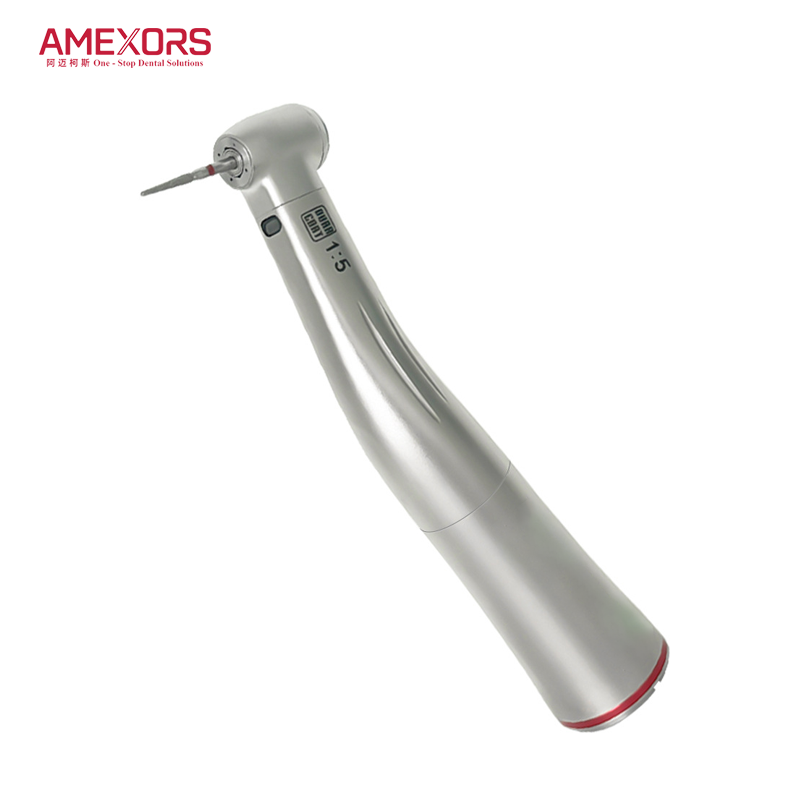
5. AMEXORS 1:5 Fiber Optic Speed Increasing Contra Angle Handpiece
If you are looking for a 1:5 speed increasing contra angle handpiece with fiber optic illumination, this AMEXORS model is one option to evaluate further.
The product is specified with a maximum rotational speed of 200,000 RPM, a push-button chuck, and a four-way internal water spray configuration. For clinics or distributors already equipped with a compatible electric motor and looking for this type of fiber optic speed-increasing handpiece, the specifications below can help determine whether the model meets their requirements.
Product Specifications
| Specification | Product Details |
|---|---|
| Handpiece type | 1:5 speed-increasing contra angle handpiece |
| Maximum rotational speed | 200,000 RPM |
| Illumination | Fiber optic configuration |
| Connection | E-Type connection, as specified for this model |
| Chuck type | Push-button |
| Compatible burs | FG burs with a diameter of 1.59–1.60 mm |
| Water spray | Four-way internal water spray |
| Cleaning and sterilization | Follow the manufacturer’s instructions and specified sterilization cycles |
These specifications describe the configuration of this particular model. The maximum speed, E-Type connection, and fiber optic configuration do not by themselves establish compatibility with every electric dental motor. Buyers should confirm the complete technical documentation and operating requirements before ordering.
Is This Model Suitable for Your Requirements?
If you already use a compatible electric motor system and need a fiber optic 1:5 speed increasing handpiece, start by verifying the model’s connection, rated speed, and illumination compatibility.
If you are a distributor or importer, you can also assess the bur specification, water spray configuration, maintenance requirements, and available product documentation against your customers’ needs.
For buyers planning to sell the product under their own brand, confirm during the quotation stage which options may be available for branding, packaging, labels, and instructions. Specific customization options, costs, and delivery terms must be confirmed with the supplier.
6. What Should Distributors and Importers Consider Before Ordering?
For distributors and importers, purchasing is not simply about finding a handpiece with suitable specifications. The product must also fit the target customers’ equipment and meet the requirements of ongoing sales and service.
First, establish whether your target customers primarily use electric dental motors or air-turbine handpieces. If most customers use pneumatic systems, selling 1:5 speed increasing handpieces may also require consideration of motor compatibility and the equipment investment needed to adopt the new system. If customers already use electric motors, connection compatibility and the exact handpiece configuration become more immediate purchasing priorities.
After selecting a model, consider ordering samples to verify the physical product, technical documentation, and agreed configuration. For products that must work with specific motors, compatibility should be assessed according to the manufacturer’s instructions rather than inferred from appearance or connection type alone.
If you plan to reorder regularly, establish clear specifications, quality requirements, and a process for communicating product changes. A sample that meets expectations does not automatically guarantee that every subsequent batch will be identical. Bulk orders should therefore be supported by clear product specifications and quality agreements.
After-sales support should also be discussed before placing an order. This includes available replacement parts, warranty terms, the process for handling product issues, and relevant product documentation. These arrangements affect a distributor’s ability to support customers after the sale.
OEM and Private-Label Purchasing
If you plan to sell 1:5 speed increasing handpieces under your own brand, review the available OEM and private-label options and discuss branding, packaging, and product documentation early in the purchasing process.
Ask the supplier to clarify:
- Whether product branding or logo customization is available, and under what conditions.
- Whether standard packaging, customized boxes, or other packaging options can be provided.
- Whether user instructions are available in the required market language, or whether the supplier can work with a translation supplied and reviewed by the buyer.
- How product labels, specification sheets, and other documents can be prepared.
- Whether a customization option affects cost, minimum order quantity, or lead time.
These are purchasing conditions that must be confirmed individually. They should not be taken to mean that every customization service is necessarily available for every model.
Importers serving markets with specific regulatory requirements should also confirm that product documentation and labeling meet the applicable local rules. Any relevant documents should be verified as genuine, valid, and applicable to the actual model being purchased.
Frequently Asked Questions
Does a Red-Ring Dental Handpiece Always Have a 1:5 Gear Ratio?
A red ring is commonly used to identify speed-increasing dental contra angle handpieces, and 1:5 is a common ratio. However, color coding does not replace formal specifications. Confirm the gear ratio and rated speed in the manufacturer’s documentation before purchasing.
Does a 1:5 Speed Increasing Handpiece Require an Electric Motor?
A typical 1:5 speed increasing handpiece is driven by a compatible electric dental motor, with an internal gear mechanism increasing its output speed. The exact motor requirements and connection type should be confirmed against the documentation for the specific model.
Can Every 1:5 Handpiece Reach 200,000 RPM?
No. A 1:5 ratio does not mean that every model has the same maximum output speed. Use the manufacturer’s rated specifications and applicable operating conditions to verify the permitted speed.
Can a Fiber Optic 1:5 Handpiece Work with a Non-Optic Motor?
Not necessarily. The handpiece and motor system must have compatible optical connections and illumination support. Check the complete connection and lighting specifications before purchasing.
Is a 1:5 Handpiece Better Than a Conventional Air-Turbine Handpiece?
Neither option is universally better for every user. A 1:5 speed increasing handpiece is worth considering for users evaluating electric motor drive characteristics and compatibility with their existing system. An air-turbine handpiece may be more practical for clinics with existing pneumatic equipment that prioritize lightweight handling and limiting additional equipment costs. The right choice depends on the equipment already in place, working requirements, and the performance of the specific models being compared.
What Should Distributors Confirm Before Placing a Bulk Order?
Distributors should confirm product specifications, sample evaluation results, equipment compatibility, quality requirements, warranty terms, spare-part availability, and delivery arrangements. For OEM or private-label orders, branding, packaging, instruction language, and other customization requirements should also be agreed upon in advance.
Conclusion
Choosing a 1:5 red ring dental handpiece starts with determining whether an electric motor-driven system suits the existing equipment and intended use. Buyers can then compare the gear ratio, maximum rotational speed, illumination, water spray, bur compatibility, and maintenance requirements.
For clinics already equipped with a compatible electric motor and looking for this type of high-speed cutting configuration, a 1:5 speed increasing handpiece is worth evaluating. Clinics that primarily use air-turbine handpieces and are satisfied with their existing equipment do not need to change systems solely because of a particular gear ratio or maximum speed rating.
If you are looking for a fiber optic 1:5 speed increasing contra angle handpiece, review the technical specifications of the relevant AMEXORS model and contact AMEXORS to confirm motor compatibility, product configuration, and pricing. Distributors and private-label buyers can also discuss samples, packaging, product documentation, and future purchasing requirements as part of the quotation process.